
WELCOME BONUS 300%
UP TO €2000 + 100
FREE SPINS
UP TO €2000 + 100
FREE SPINS
Home → Payments
Payments at MrBit Casino
A 50 EUR Budget: Which Method Fits
A deposit of €50 fits every card listed for MrBit Casino, since Visa and Mastercard start at €15 and accept up to €6,000, so the amount clears both the floor and the ceiling. Bank Wire begins at €25 and reaches €15,000, which also leaves €50 well inside the permitted band for a bank transfer. The player only has to pick a method whose minimum sits at or below the intended sum and then enter €50 in the cashier field.
E-wallets open the same route at a lower threshold: Skrill and Neteller each accept deposits from €15 and up to €12,000, so €50 is comfortably valid. The same €15 floor applies to ecoPayz, MuchBetter and Jeton, each capped at €10,000 for a single deposit. Anyone funding an account with €50 should therefore confirm the chosen wallet is one of these named providers before starting the transfer.
Crypto changes the arithmetic slightly, because Bitcoin, Ethereum, Litecoin, Ripple and Dogecoin each require at least €25 and allow up to €12,000 per deposit. A €50 deposit satisfies that minimum, but the euro figure is only an equivalent at the moment of conversion. The practical step is to send the coin amount that matches roughly €50 and accept that the credited euro value may differ on arrival.
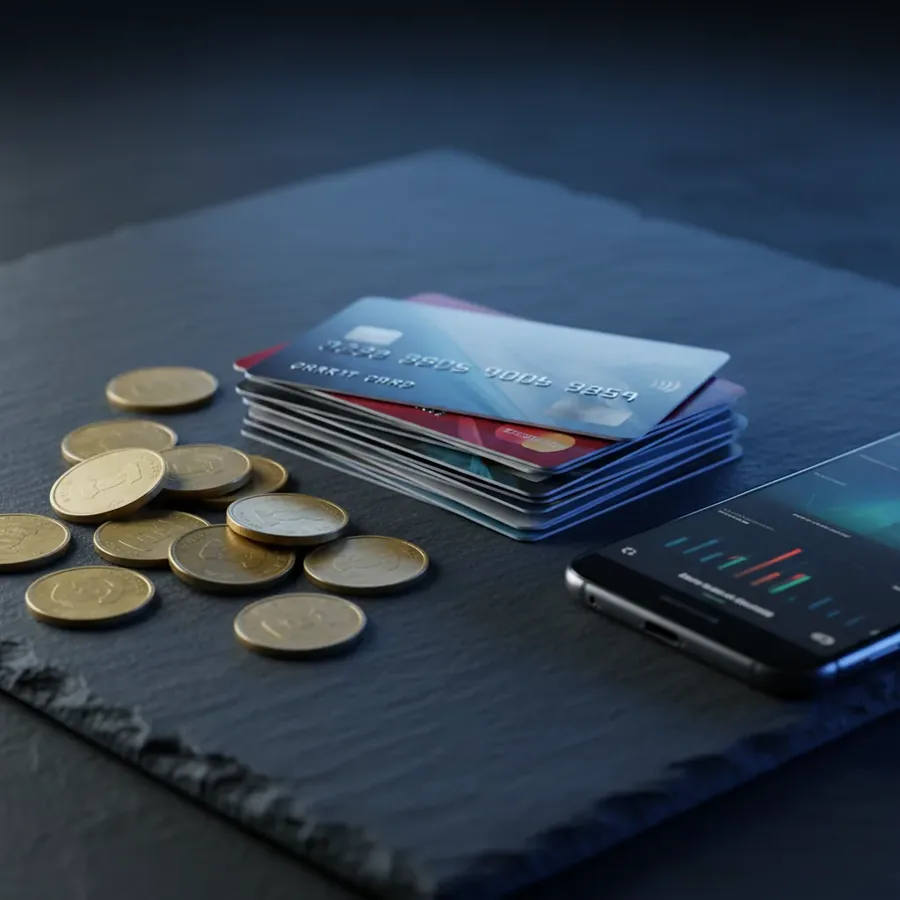
Confirming 3D Secure on Card Payments
A card deposit at MrBit Casino needs the 3D-Secure step finished inside the bank's own window, because an abandoned or timed-out challenge usually cancels the transaction. Visa and Mastercard both start at €15 and accept up to €6,000, so a €50 payment sits well inside the permitted range. The approval must come from the issuing bank, not from the casino page.
The sequence is short: enter the card details, wait for the redirect to the bank, then confirm the code or biometric prompt that the bank sends. Only after that confirmation returns to the cashier does the amount count as deposited. Closing the window, refreshing the page or letting the timer run out interrupts the chain and leaves the balance unchanged.
The consequence for the reader is to have the bank's authentication method ready before starting the deposit, whether that is an app approval, an SMS code or a card reader. If the challenge fails, the card is simply not charged and the deposit must be started again from the beginning. Repeating the attempt without completing the bank step only produces the same result.
Crypto Exchange Rates Move Until the Deposit Lands
The euro value of a crypto deposit is not fixed when the transfer is sent, because the rate keeps moving until the coins are credited to the account. Bitcoin, Ethereum, Litecoin, Ripple and Dogecoin each start at €25 and allow up to €12,000 per deposit. The amount that finally lands therefore depends on the rate at the moment of credit, not the rate shown when the order was placed.
Network confirmation adds to that gap, since the transfer only counts once the blockchain has processed it. During that interval the coin price can rise or fall against the euro, so a payment intended as €50 may credit slightly more or slightly less. The €25 floor is measured against the credited euro value, which is why a transfer sent just above the minimum can slip below it.
The reader should send an amount with a small margin above the intended figure and check the credited balance before treating the deposit as complete. Comparing the euro value at credit with the value at sending shows how much the rate moved. Nothing about the deposit is final until the coins appear in the account.
Payment methods and deposit limits
| Method | Type | Min. Deposit | Limit |
|---|---|---|---|
| Visa | card | €15 | €6,000 |
| Mastercard | card | €15 | €6,000 |
| Bank Wire | bank | €25 | €15,000 |
| Skrill | e-wallet | €15 | €12,000 |
| Neteller | e-wallet | €15 | €12,000 |
| Bitcoin | crypto | €25 | €12,000 |
| Ethereum | crypto | €25 | €12,000 |
| Litecoin | crypto | €25 | €12,000 |
| Ripple | crypto | €25 | €12,000 |
| Dogecoin | crypto | €25 | €12,000 |
| ecoPayz | e-wallet | €15 | €10,000 |
| MuchBetter | e-wallet | €15 | €10,000 |
| Jeton | e-wallet | €15 | €10,000 |
Switching Payment Methods: What to Consider
Switching the deposit route inside the cashier is allowed, but each method carries its own floor and ceiling, so the choice made at the till decides how much can be moved in one go. Cards sit at the low end, with Visa and Mastercard starting at €15 and stopping at €6,000 per deposit. A player who needs to fund more than that in a single transaction has to look at Bank Wire instead.
Bank Wire accepts from €25 and reaches up to €15,000, the widest band on offer, while the crypto routes Bitcoin, Ethereum, Litecoin, Ripple and Dogecoin each begin at €25 and top out at €12,000. E-wallets Skrill and Neteller share the same €12,000 ceiling but open at €15, and ecoPayz, MuchBetter and Jeton close at €10,000. The deciding factor is therefore the size of the intended deposit, not the label on the button.
Before confirming the switch, the player should check whether the new method is already verified in the account, because the first withdrawal can only be requested once verification is complete. Choosing a route with a lower maximum than the planned amount forces a second deposit, and each deposit feeds the same welcome offer terms.
Which Documents Verification Actually Requires
Verification, known as KYC, is the identity check the casino runs before releasing money, and it rests on two documents: an ID and a proof of address. KYC means the process of confirming that the person behind the account is who they claim to be. Both items must be supplied before the first withdrawal can be processed.
The ID confirms the player's name, date of birth and photograph, while the proof of address confirms where the player actually lives, and the two together must match the details registered on the account. A mismatch between the name on the deposit method and the name on the ID is the usual reason a check stalls.
The practical consequence is that a new player should prepare both documents early rather than after a win, since no payout leaves the account until the review is finished. Anyone depositing through a third party's card or wallet will be asked for further clarification instead of a straight approval.
No Bank Account? 2 Methods That Work
Two routes work without any bank account at all: cryptocurrencies and e-wallets. Cryptocurrencies here are Bitcoin, Ethereum, Litecoin, Ripple and Dogecoin, and the e-wallets are Skrill, Neteller, ecoPayz, MuchBetter and Jeton. Neither group requires a bank transfer or a card issued by a bank.
Crypto deposits start at €25 and can reach €12,000 per transaction, while Skrill and Neteller start at €15 and reach €12,000, and ecoPayz, MuchBetter and Jeton start at €15 and stop at €10,000. A player holding only a wallet balance can therefore fund an account without ever touching a bank.
The catch sits at the payout stage rather than the deposit stage: the ID and proof of address are still required before the first withdrawal, and the name on the wallet must match the name on that ID. A wallet registered to somebody else will block the payout even though the deposit went through.
13 Payment Methods Compared
Thirteen deposit routes are available in total, split across crypto, cards, bank transfer and e-wallets. The lowest minimum deposit on the list is €15, charged by the cards and by the e-wallets, and the highest maximum deposit is €15,000, reached only by Bank Wire.
By group, the crypto set of Bitcoin, Ethereum, Litecoin, Ripple and Dogecoin runs from €25 to €12,000, the card set of Visa and Mastercard runs from €15 to €6,000, Bank Wire runs from €25 to €15,000, and the e-wallet set runs from €15 to either €12,000 for Skrill and Neteller or €10,000 for ecoPayz, MuchBetter and Jeton.
Reading the two ends together shows the trade-off: the methods with the lowest entry point, at €15, are also the ones with the lowest ceilings, at €6,000 for the cards and €10,000 for three of the wallets. A player sizing a single deposit against those limits avoids splitting the payment into instalments.
Without Verification, No Withdrawal Goes Through
Account verification is a mandatory step at MrBit Casino, and until it is complete the withdrawal function remains effectively locked. KYC means the identity check that confirms a player is who they claim to be, and it always precedes a first payout. Two documents are requested: a valid ID and a proof of address. Both must be supplied before the first withdrawal is processed, so a player should prepare them early.
The practical order matters here. A player uploads the ID document and the proof of address, then waits for the review to finish before submitting any cash-out request. Deposits can be made without this step, and the minimum deposit through ecoPayz, MuchBetter or Jeton is €15 in each case. Nothing in the payout queue moves while the file is incomplete.
The consequence is straightforward. A player who tries to withdraw first and verify later will see the request stall, and no amount of chasing changes that. Completing both documents at registration or immediately after the first deposit removes the delay entirely. The verification applies to every player, regardless of how small or large the withdrawal is.
Visa and Mastercard: How Card Payments Work
Card payments at MrBit Casino work through the standard card rails, with Visa and Mastercard both accepted for deposits. Each card starts at €15, the same floor as the e-wallets, and each card carries a ceiling of €6,000 per deposit. The card route therefore sits below the e-wallet limit and well below the bank wire maximum.
The steps are familiar: the player opens the cashier, selects Visa or Mastercard, enters the card number, expiry date and security code, then confirms the amount. The deposit posts once the card issuer approves the transaction. Because the card ceiling is €6,000 while ecoPayz, MuchBetter and Jeton each allow up to €10,000, a large single deposit may need a different method.
A player should also check whether the card issuer treats the transaction as a cash advance, since some banks do. If the deposit is declined, the amount is not lost and can be retried or routed through an e-wallet instead. The €15 minimum stays the same whichever card is used, so small top-ups remain possible.
Withdrawal Rejected: 4 Common Reasons
A rejected withdrawal usually traces back to one of four causes, and most of them are procedural rather than final. The first is unfinished verification: with no ID and proof of address on file, the payout cannot proceed. The second is a deposit made through a method that was never used to fund the account, since payouts normally return along the same route.
The third cause is an amount that falls outside what the chosen method supports. Bank Wire accepts deposits from €25 up to €15,000, while Bitcoin, Ethereum, Litecoin, Ripple and Dogecoin each start at €25 and cap at €12,000. A request built around the wrong method's range will bounce back. The fourth cause is a mismatch between the account name and the identity documents supplied.
The player's move is to check these four points in order before resubmitting. Confirm the ID and address documents are approved, confirm the withdrawal method matches a method already used for a deposit, confirm the sum fits that method's range, and confirm the name on the account matches the documents exactly. Fixing one of these usually clears the rejection.
Deposit Not Showing Up? 3 Things to Check First
When a deposit does not appear, the first three checks resolve most cases. Start with the payment confirmation: a receipt or approval notice from the provider means the money left the player's side, while the absence of one means the transaction never completed. Then look at the transaction status inside the account, since a pending deposit is not the same as a failed one.
Second, confirm the method and the amount against its own range. A card deposit must sit between €15 and €6,000, an ecoPayz, MuchBetter or Jeton deposit between €15 and €10,000, and a Bank Wire transfer between €25 and €15,000. A sum outside its method's range will not post. Third, check that the deposit was not sent to a different account or wallet.
The consequence is that a player should wait for the provider's confirmation before retrying anything. Retrying too early can double a deposit that was merely slow. If the confirmation exists and the range is correct, the remaining step is to raise the matter through the casino's support channel with the transaction reference in hand.
A Mobile Withdrawal Request in 4 Steps
Withdrawing from a mobile browser follows four steps inside the account. Sign in, open the cashier or wallet area, choose the withdrawal option, and select the method that matches a deposit already made. The payout then returns along that same route, which is why the method choice is the step most often got wrong.
The second and third steps are the amount and the confirmation. Enter the sum, keeping it inside the range that the chosen method supports: Bank Wire runs from €25 to €15,000, while Bitcoin, Ethereum, Litecoin, Ripple and Dogecoin each run from €25 to €12,000. Then review the details and submit. A verification file with ID and proof of address must already be approved.
The fourth step is the follow-up. After submission, the request appears as pending until it is processed, and the player should keep the reference number. If the request is rejected, the usual causes are an unfinished verification or a method mismatch. Rechecking both before resubmitting saves a second failed attempt on the phone.
Contact
Live - online chat
Banking









Providers












MrBit Casino 2026